





Farmhand Life
0 playsGame Overview
Farmhand is a relaxing farming simulation game that blends crop management with economic strategy and market-based decision-making. While it begins like a traditional farming experience, the game quickly becomes deeper because profits depend not only on growing crops, but also on understanding how the economy changes over time.
At its core, Farmhand is about building a self-sustaining system. Every action affects your financial position, and smart planning matters just as much as efficient farming. The game combines farming, trading, crafting, and resource management into a progression loop where long-term thinking leads to success.
The core gameplay flow follows a simple but rewarding cycle: buy seeds, plant crops, grow resources, harvest products, sell strategically, and reinvest profits into expansion.
You begin the game with a $500 loan, which immediately creates pressure and risk. Instead of starting with unlimited freedom, you are forced to think carefully about how every dollar is spent. Poor decisions can push you deeper into debt, while smart investments gradually turn your small farm into a profitable operation.
This loan system changes the psychology of gameplay significantly. You are not simply farming for fun. You are managing risk, protecting cash flow, and trying to escape financial pressure while expanding your farm efficiently.
The farming system itself is simple to understand but becomes more strategic over time. Players purchase seeds, plant crops, water them daily, and harvest them when fully grown. Different crops have different growth times, costs, and market values, which creates meaningful decisions about what to plant and when.
However, the real depth comes from the dynamic market system.
Unlike many farming games where prices remain static, Farmhand uses an economy that changes every in-game day. Prices rise and fall depending on supply and demand, meaning timing becomes one of the most important parts of progression.
Buying large amounts of seeds or items increases their price. Selling large amounts of crops lowers market value. This creates a living economy where your own actions influence future profits.
Because of this, success is not just about producing resources. It is about understanding market timing.
Selling crops immediately after harvesting may provide quick money, but waiting for better prices can lead to much larger profits later. At the same time, holding inventory too long may create financial pressure if loan payments or expansion costs become difficult to manage.
This creates a constant balance between short-term survival and long-term optimization.
As your farm grows, the game introduces more advanced progression systems that expand beyond basic crop farming. New crops, tools, buildings, and production systems become available, gradually turning your farm into a more complex economic network.
Livestock systems add another layer of management. Players can build cow pens, raise animals, and produce milk for additional income. Breeding systems introduce opportunities for rare outcomes, including unusual variants like Rainbow Cows that provide special rewards and higher value products.
These systems encourage diversification rather than relying entirely on crops for profit.
Crafting becomes increasingly important during later stages of progression. Instead of selling raw materials directly, players can use workshops to convert harvested resources into higher-value products.
This changes the economy from simple farming into production chain management.
For example, crops that seem average at first may become extremely profitable after being processed into crafted goods. Understanding which materials should be sold raw and which should be crafted becomes an important part of maximizing efficiency.
Over time, Farmhand becomes less about individual actions and more about system design.
You begin thinking in terms of production pipelines: Which crops grow fastest? Which products create the best profit margins? How much inventory should be stored versus sold immediately? How should land space be allocated for maximum efficiency?
This systems-based progression is what gives the game long-term depth.
The multiplayer economy introduces another interesting layer. Markets are shared across players, meaning the economy is partially shaped by collective activity. Large buying and selling trends can affect global prices, creating opportunities for players who understand market behavior better than others.
This transforms farming into a competitive economic simulation where observation and timing become powerful tools.
More active multiplayer participation also increases passive income opportunities, encouraging long-term engagement with the shared economy.
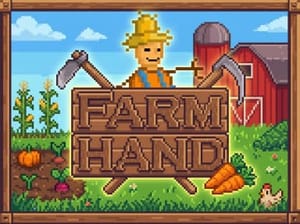
Visually, Farmhand uses a clean and colorful style that keeps the experience relaxing even as economic systems become more advanced. The interface stays readable and efficient, helping players focus on strategy and progression rather than complicated controls.
The pacing is steady and rewarding. Early gameplay focuses on surviving financially and learning the basics, while later progression becomes increasingly focused on optimization, automation, and large-scale economic planning.
Farmhand is perfect for players who enjoy farming simulators, management games, economy systems, and progression-driven strategy experiences. Whether you prefer casual farming, market speculation, livestock management, or designing efficient production systems, the game offers a satisfying balance between relaxation and strategic depth.
What makes Farmhand especially engaging is that every mechanic connects to the economy. Crops, livestock, crafting, storage, and multiplayer trading all feed into a larger financial system where smart decisions compound over time. The real challenge is not simply growing crops, but learning how to build an efficient farming business that can survive market changes, eliminate debt, and continue expanding profitably.
How to Play Farmhand Life
Controls
- Mouse – Interact with crops, tools, and menus
- Plant seeds → Water daily → Harvest crops
- Sell items → Upgrade farm → Manage loans
- Press bed icon – End day & save progress