





OtterGames logo OtterGames
Plants vs Brainrots
Plants vs Brainrots
Play Now
Plants vs Brainrots

Plants vs Brainrots

0 plays

About Plants vs Brainrots

3.3 / 5 (2 vote s)
Plants vs Brainrots cover

Game Overview

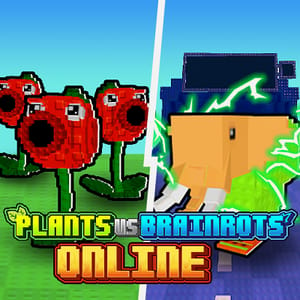
Plants vs. Brainrots is a colorful tower defense strategy game where you build a defensive garden filled with powerful plants to stop endless waves of strange enemies called Brainrots. Combining resource management, unit upgrades, mutations, and wave-based survival, the game creates a strategic experience focused on planning, positioning, and long-term progression.

The gameplay revolves around building an efficient defense system while adapting to stronger enemies and unlocking more advanced plant abilities over time. Every battle requires players to balance resource spending, defensive placement, and upgrade timing to survive increasingly difficult attacks.

The core gameplay loop follows a classic tower defense structure: collect resources, plant defenders, stop enemy waves, upgrade your garden, unlock stronger mutations, and survive tougher battles.

At the beginning of the game, players start with basic plants that can only handle weaker Brainrot enemies. These early units are inexpensive and easy to place, helping players establish their first defensive lines across the garden.

As waves continue, stronger enemies begin appearing with higher health, faster movement, and more dangerous abilities. Simple plants quickly become insufficient, forcing players to expand their strategy and unlock stronger defenders.

Each plant type has its own strengths, weaknesses, and battlefield role. Some plants focus on rapid attacks and steady damage output, while others specialize in slowing enemies, freezing attackers, or controlling large groups.

Because plants cost resources to place, choosing which units to grow becomes a major strategic decision.

Stronger plants deal significantly more damage and often possess special abilities, but they also require more resources to deploy. Spending too aggressively on expensive units too early can weaken overall defenses, while relying only on cheap plants may fail against stronger enemy waves.

This creates a constant balance between efficiency and power.

Placement strategy is equally important. Different plants perform better in different positions depending on their attack range and abilities. Defensive layouts must be adjusted constantly as enemy pressure increases and new Brainrot types appear.

Some areas benefit from heavy damage-focused plants, while others require slowing effects or defensive support units to control enemy movement effectively.

One of the game’s most unique mechanics is the mutation system.

Plants can mutate during progression, gaining stronger attacks, improved stats, or entirely new abilities. Some mutations allow plants to freeze enemies, attack multiple targets, or increase damage significantly.

This system adds unpredictability and experimentation because mutated plants can completely change defensive strategies.

Players are encouraged to test different plant combinations and discover which mutations work best together. Certain mutated abilities create strong synergies that make defensive lines far more effective than standard setups.

The mutation system also gives long-term progression more depth than simple damage upgrades alone.

Another interesting feature is the Brainrot collection mechanic. Defeated enemies can sometimes be captured and converted into passive income sources.

This creates an additional economic layer beyond standard tower defense gameplay.

Instead of only defending against enemies, players gradually turn the invasion itself into a resource system that supports future growth. Captured Brainrots generate passive income over time, helping fund stronger plants, mutations, and upgrades.

This mechanic changes the pacing of the game by introducing idle-style progression alongside active defense management.

Over time, the garden evolves from a simple defensive setup into a much larger strategic ecosystem involving plant upgrades, enemy farming, and resource optimization.

Enemy waves become increasingly intense throughout progression. Larger enemy groups, faster Brainrots, and stronger special units force players to constantly improve their defenses rather than relying on a single strategy forever.

Because of this scaling difficulty, adaptability becomes one of the most important skills in the game.

Players gradually begin thinking more strategically: Which plants provide the best efficiency? Which mutations counter specific enemies? When should resources be saved versus spent immediately? How should passive income systems support long-term growth?

This gradual shift from simple survival to strategic optimization creates strong replayability and long-term engagement.

Visually, Plants vs. Brainrots uses bright colors, funny enemy designs, and animated plant effects that keep battles lively and easy to follow. The lighthearted presentation balances well with the increasingly complex strategic gameplay.

The pacing alternates naturally between preparation and pressure. Calm moments spent organizing defenses quickly transition into chaotic battles where efficient layouts and upgrades determine survival.

Another reason the game remains addictive is the constant feeling of progression. Every new plant, mutation, and captured Brainrot improves future runs and unlocks stronger strategies for later waves.

Plants vs. Brainrots is perfect for players who enjoy tower defense games, strategy-focused progression, resource management systems, and upgrade-heavy gameplay. Whether you prefer experimenting with mutated plants, building efficient defensive layouts, or maximizing passive income systems, the game offers a satisfying blend of strategy and survival.

What makes Plants vs. Brainrots especially engaging is how every mechanic connects together. Plants defend the garden, mutations reshape strategy, defeated enemies generate income, and stronger economies unlock better defenses. The real challenge is not simply surviving enemy waves, but learning how to build a self-sustaining defensive system capable of handling increasingly dangerous Brainrot invasions.

How to Play Plants vs Brainrots

Use your mouse or touch controls to plant seeds, place defenses, and manage your garden.

Build your defense, upgrade plants, and stop waves of Brainrots from invading your base.

Tags

Arcade Casual Survival Upgrade Strategy Tower-defense Plants Defense Strategy-game Resource-management