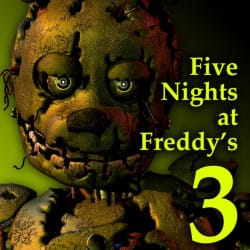
Five Nights at Freddy’s 3 (FNAF 3)
0 playsGame Overview
Five Nights at Freddy’s 3 is a psychological survival horror game that takes the series into a darker and more disturbing direction. Set inside Fazbear’s Fright, a horror attraction created from the remains of the original Freddy Fazbear’s Pizza, the game combines surveillance mechanics, system management, and psychological tension to create one of the most atmospheric entries in the FNAF series.
Thirty years after the events connected to Freddy Fazbear’s Pizza, the legends surrounding the restaurant have become urban horror stories. Fazbear’s Fright is built to recreate those terrifying rumors using old animatronic parts, decorations, and recovered equipment from the original locations.
However, the attraction hides something far more dangerous than simple props and decorations.
You play as a night guard working inside the attraction during its final preparation stage before opening to the public. At first, the environment feels abandoned and quiet, but everything changes after the discovery of Springtrap, a damaged animatronic containing something deeply sinister hidden inside.
Unlike earlier games in the series that forced players to survive against multiple active animatronics, FNAF 3 focuses almost entirely on a single primary threat. This change creates a more strategic style of gameplay centered around tracking and manipulating Springtrap’s movement throughout the building.
Players monitor security cameras to follow Springtrap through different rooms and corridors while using audio systems to lure him away from the office. Careful positioning and timing become essential because allowing Springtrap to approach too closely usually leads to instant failure.
The gameplay creates constant pressure because players are forced to divide attention between multiple systems at the same time. Cameras help track movement, audio devices distract Springtrap, and ventilation systems prevent dangerous malfunctions that distort vision and reduce awareness.
A major addition in FNAF 3 is system management. Cameras, audio systems, and ventilation can randomly fail during the night, forcing players to reboot systems manually while still keeping track of Springtrap’s location.
This creates difficult decisions constantly. Spending too much time repairing systems may allow Springtrap to move closer unnoticed, while ignoring failures can make survival nearly impossible.
The ventilation system is especially important because failures trigger hallucinations, distorted visuals, and heavy audio interference that make tracking threats much harder.
Psychological horror plays a much larger role in this installment compared to previous games. Phantom animatronics appear throughout the nights as disturbing hallucinations that cannot kill the player directly but can disrupt systems, block vision, and create panic during dangerous moments.
These phantom encounters increase stress significantly because players are never fully certain whether what they are seeing is a real threat or another hallucination interfering with survival.
The atmosphere inside Fazbear’s Fright is one of the strongest parts of the experience. The attraction feels decayed, claustrophobic, and haunted. Flickering lights, damaged walls, broken equipment, and unsettling ambient sounds constantly reinforce the sense that something is deeply wrong inside the building.
Sound design plays a major role in tension building. Mechanical noises, distorted audio, ventilation sounds, and sudden system failures create constant psychological pressure even during quiet moments.
The pacing is slower and more strategic than some earlier FNAF entries, but this slower structure actually increases the tension because players spend long periods managing systems while waiting for Springtrap to appear unexpectedly nearby.
Every mistake feels dangerous because the game gives very little room for recovery once systems begin failing simultaneously.
The visual style also strengthens the horror atmosphere. The attraction combines old animatronic parts, dark hallways, and damaged environments to create a setting that feels both nostalgic and deeply unsettling.
Another major strength of FNAF 3 is its hidden lore and multiple ending system. Secret minigames and hidden interactions reveal additional story details connected to the history of Freddy Fazbear’s Pizza and the events surrounding Springtrap.
Players who explore hidden mechanics and complete secret objectives can unlock different endings, adding replay value and encouraging deeper investigation into the game’s mysteries.
Over time, players naturally improve at understanding Springtrap’s movement patterns, managing system failures efficiently, and staying calm during hallucination-heavy sections.
Five Nights at Freddy’s 3 stands out because it shifts the series toward psychological tension and strategic survival instead of relying only on sudden scares. The combination of system management, constant pressure, and disturbing atmosphere creates a uniquely stressful horror experience.
The game is perfect for players who enjoy psychological horror, strategy-based survival gameplay, environmental tension, and hidden storytelling. Whether you are tracking Springtrap through broken security cameras, rebooting failing systems, or uncovering dark secrets hidden inside the attraction, the experience remains suspenseful and memorable throughout.
If you enjoy horror games built around tension, resource management, and psychological fear, Five Nights at Freddy’s 3 delivers a haunting survival experience worth playing on OtterGames.org.
How to Play Five Nights at Freddy’s 3 (FNAF 3)

Use security cameras to track Springtrap
Play audio cues to lure enemies away
Manage and reboot ventilation and systems
Avoid hallucinations that disrupt your vision
Survive from midnight to 6 AM each night