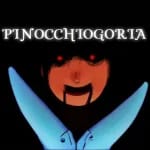






Pinocchiogoria
0 playsGame Overview
Pinocchiogoria is a psychological horror game that combines pixel-art visuals, emotional storytelling, survival mechanics, and puzzle-solving into a dark and deeply unsettling experience. Set inside a decaying house filled with painful memories and hidden secrets, the game follows Mia as she returns to confront a tragedy connected to her family and a terrifying living puppet that should never have existed.
Years after a devastating incident destroyed her childhood life, Mia steps back into the home she once knew. Instead of finding peace or closure, she discovers a nightmare waiting inside the walls. Familiar rooms have become twisted and threatening, and something unnatural now moves through the house alongside her.
At the center of the horror is Pinocchio, a living marionette that stalks the environment unpredictably. Its presence transforms exploration into a constant survival challenge because danger can appear without warning at almost any moment.
The game uses a side-scrolling format that focuses heavily on atmosphere, exploration, and tension. Players guide Mia through dark hallways, abandoned rooms, and disturbing environments while searching for clues that slowly reveal the truth behind the tragedy connected to her father and the puppet.
The storytelling is subtle and environmental rather than fully explained through direct dialogue. Notes, symbolic objects, visual details, and hidden interactions gradually piece together the disturbing history of the house and the emotional trauma surrounding Mia’s past.
This slow discovery process creates a strong sense of mystery throughout the experience. Players are constantly uncovering fragments of information while trying to understand what truly happened and why the puppet continues to exist.
Survival mechanics add constant pressure during exploration. Pinocchio can appear unexpectedly, forcing players to react quickly by hiding, escaping, or carefully navigating dangerous areas. The enemy’s unpredictable behavior creates tension because players never feel completely safe inside the house.
Instead of relying entirely on combat, the game focuses on vulnerability and survival. Observation and patience become more important than aggression, making every encounter feel stressful and meaningful.
The horror comes primarily from atmosphere and psychological tension rather than nonstop jump scares. Dim lighting, eerie silence, disturbing sound design, and sudden environmental changes create a constant feeling of dread as players move deeper into the nightmare.
Puzzle-solving plays a major role in progression. Players must search for keys, jewels, soul fragments, and important items needed to unlock new sections of the house and trigger story events. Many puzzles require careful observation of the environment and attention to subtle clues hidden throughout the game.
The interconnected structure of the house also makes exploration feel rewarding. Previously inaccessible areas gradually open as players collect important items and solve environmental challenges.
One of the most interesting aspects of Pinocchiogoria is its focus on emotional storytelling. Beneath the horror elements, the game explores themes of grief, guilt, identity, trauma, and the consequences of obsession. Mia’s journey feels personal and psychological rather than simply being about escaping a monster.
The multiple ending system adds replay value and encourages deeper exploration. Player choices, collected items, and discovered secrets influence how the story concludes, leading to different interpretations of Mia’s fate and the truth behind the puppet.
Some endings focus on escape and survival, while others become darker and more tragic. This branching structure gives additional meaning to exploration and encourages players to uncover every hidden detail inside the house.
Visually, the pixel-art style works extremely well for the horror atmosphere. The retro-inspired graphics create strong contrast between simplicity and disturbing imagery, allowing the environments and symbolic details to feel memorable without needing realistic visuals.
The sound design also plays a major role in building tension. Quiet footsteps, distant noises, creaking doors, and sudden audio shifts constantly remind players that danger may be nearby even during calm moments.
The pacing balances exploration, storytelling, puzzles, and survival carefully. Slower sections allow players to absorb the atmosphere and understand the environment, while sudden encounters with the puppet create moments of panic and urgency.
Pinocchiogoria stands out because it blends emotional storytelling with psychological horror in a way that feels personal and immersive. The game is not only about escaping danger but also about uncovering painful truths hidden beneath the surface of the house.
It is perfect for players who enjoy atmospheric horror, narrative-driven exploration, puzzle-solving, and survival experiences built around tension and emotional storytelling. Whether you are uncovering secrets, avoiding the puppet, or discovering one of the game’s multiple endings, the experience remains haunting and memorable from beginning to end.
If you enjoy psychological horror games with deep atmosphere, layered storytelling, and tense survival mechanics, Pinocchiogoria delivers a dark and unforgettable experience worth playing on OtterGames.org.
How to Play Pinocchiogoria
Controls
- Arrow Keys / Mouse Click – Move
- X – Interact with objects
- Z – Trigger dialogue or events
- Q – Toggle flashlight
- Explore, collect items, and avoid threats